Debt Discharge in Bankruptcy: Which Debts Are Eliminated (And Which Aren’t)?
One of the most important things to understand before filing bankruptcy is which of your specific debts will actually be eliminated — and which won’t. Not all debts are created equal in bankruptcy court. This guide gives you a complete, clear breakdown of dischargeable and non-dischargeable debts in both Chapter 7 and Chapter 13.
Debts That ARE Discharged in Chapter 7
The following debts are discharged (eliminated) in a successful Chapter 7 case:
- ✅ Credit card debt (all balances and interest)
- ✅ Medical bills and hospital debt
- ✅ Personal loans from banks, credit unions, and online lenders
- ✅ Utility arrears (past-due electric, gas, water bills)
- ✅ Cell phone contract termination fees
- ✅ Deficiency balances after vehicle repossession or short sale
- ✅ Lease break penalties
- ✅ Lawsuit judgments from most contract disputes
- ✅ Some older income tax debts (specific criteria apply)
- ✅ Certain business debts of sole proprietors
- ✅ Unpaid rent (on leases surrendered in bankruptcy)
Debts That Are NOT Discharged in Chapter 7
The Bankruptcy Code (11 U.S.C. § 523) lists specific categories of non-dischargeable debts:
- ❌ Child support and alimony (domestic support obligations)
- ❌ Most student loans — dischargeable only with rare “undue hardship” showing
- ❌ Recent income taxes (generally taxes due within 3 years of filing)
- ❌ Debts from fraud or false statements to creditors
- ❌ Debts from intentional injury to another person
- ❌ Debts from drunk driving accidents causing death or injury
- ❌ Criminal fines and restitution
- ❌ Debts from willful and malicious injury
- ❌ Debts from violation of federal securities laws
- ❌ Most recent property taxes (within 1 year of filing)
- ❌ Homeowner association fees accrued after filing
Special Rules: Recent Luxury Purchases and Cash Advances
Credit card charges for “luxury goods or services” totaling $800+ made within 90 days of filing are presumed non-dischargeable. Cash advances totaling $1,100+ taken within 70 days of filing are presumed non-dischargeable. These presumptions can be rebutted, but they shift the burden to you to prove the charges weren’t made in bad faith.
Student Loan Discharge: The “Undue Hardship” Exception
Student loans are dischargeable in bankruptcy only if repaying them would cause “undue hardship” to you and your dependents. Courts apply the Brunner test in most circuits: (1) you cannot maintain a minimal standard of living if forced to repay, (2) your financial situation is likely to persist, and (3) you’ve made good faith efforts to repay. The bar is high — but discharge has been granted more frequently in recent years, particularly for permanently disabled borrowers.
Filing an “adversary proceeding” (a separate lawsuit within your bankruptcy case) is required to pursue student loan discharge. This requires legal representation in most cases.
Tax Debt Discharge Rules
Income tax debt can be discharged if ALL of these apply: (1) the tax return was due more than 3 years before filing, (2) the return was filed more than 2 years before filing, (3) the tax was assessed more than 240 days before filing, (4) the return wasn’t fraudulent, and (5) you didn’t willfully evade the tax. Taxes meeting all five criteria are dischargeable like any other unsecured debt.
Chapter 13 Discharge: Broader Than Chapter 7
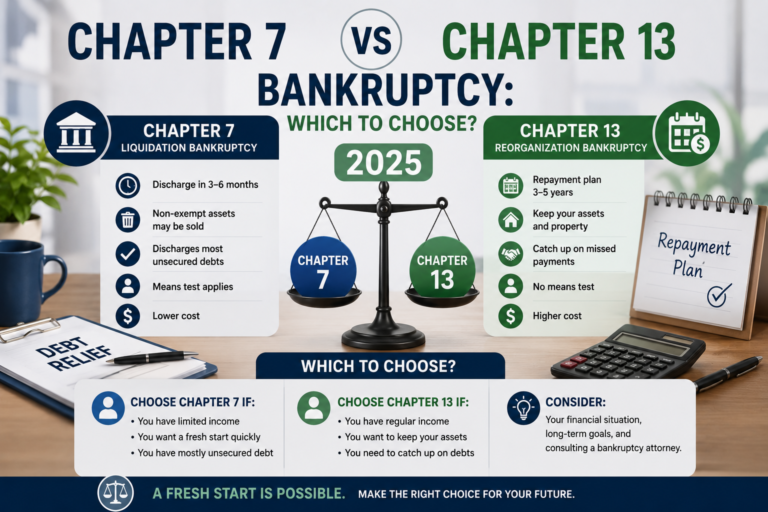
Chapter 13 discharge is somewhat broader than Chapter 7. Some debts non-dischargeable in Chapter 7 can be discharged in Chapter 13 after completing the full repayment plan, including: debts from property settlement in divorce (not support), debts from willful damage to property, and certain other debts. This “super discharge” is one reason some filers choose Chapter 13 even when they qualify for Chapter 7.
What Happens to Secured Debts?
Discharge eliminates your personal liability for a debt — but it doesn’t eliminate the lien on secured property. If you discharge a car loan without paying it, the lender can still repossess the car (the lien survives). To keep secured property (home, car), you must either reaffirm the debt (agree to remain personally liable) or continue paying and redeem the property.
See our guide on how to file Chapter 7 yourself for how to handle secured debts in your Statement of Intention, and our guide on life after bankruptcy for rebuilding after discharge.
FAQ
What if a creditor objects to my discharge?
Creditors can file “complaints to determine dischargeability” within 60 days of your 341 meeting. Most creditors don’t object — it’s time-consuming and expensive. Objections are most likely for debts involving fraud, recent luxury purchases, or intentional harm.
Are payday loans dischargeable?
Yes — payday loans are unsecured consumer debt and are fully dischargeable in Chapter 7, subject to the same limitations as other consumer debts (no presumption of non-dischargeability unless they’re very recent large cash advances).
Free Debt Discharge Eligibility Checklist
See exactly which of your debts would be eliminated in Chapter 7.